

Humanity as a Resource: Power, Control, and the Architecture of Society
Concept by Monte Edwards.
Throughout history, humans have searched for meaning in the systems that govern their lives. The following speculative framework, imagined by Monte Edwards, explores the possibility that humanity itself functions as a designed resource system operating within a larger structure of unseen control. Religion, philosophy, politics, economics, and science have all attempted to answer the same question: why does society function the way it does? One provocative theory imagines that humanity itself was engineered—not as the masters of Earth, but as a resource designed to sustain a higher intelligence.
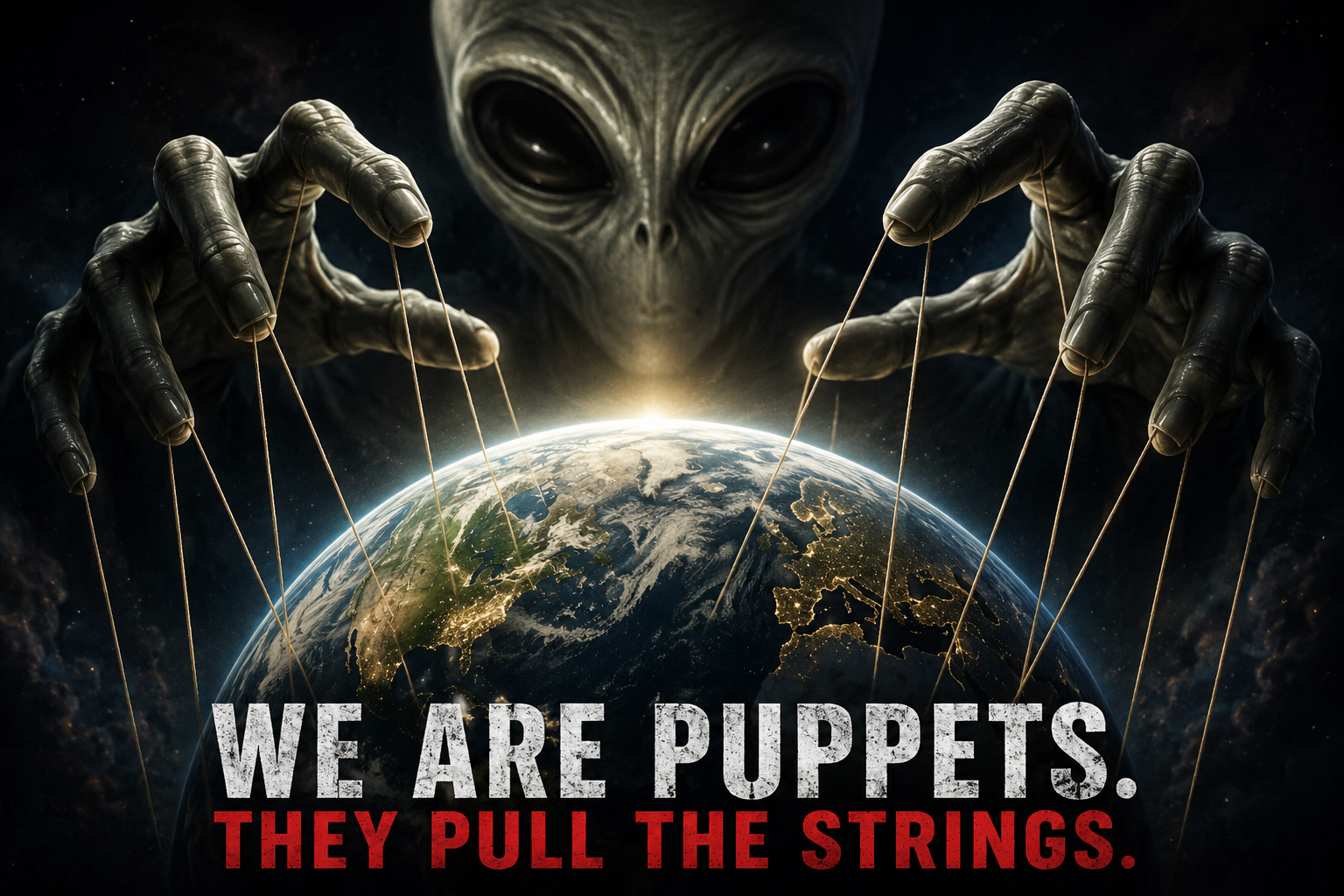
This idea begins with language. On Earth, two phrases dominate discussions of value and production: natural resources and human resources. One refers to the extraction of materials from the planet. The other refers to the organization and management of people. The terminology itself suggests something unsettling: humans are categorized alongside oil, minerals, forests, and water—not as sovereign beings, but as assets.
If humanity was created by another intelligence, then perhaps humans are not the owners of Earth at all. Perhaps they are its workforce.
Under this interpretation, humans become the aliens—not the creators. Humanity would simply be a biological system designed to extract, build, maintain, and innovate for a civilization operating above it. The planet would function less like a natural paradise and more like a self-sustaining corporation: a closed-loop machine in which humans produce, govern, consume, and police themselves while believing they are free.
What makes this theory fascinating is not whether it is literally true, but how often popular culture returns to the same themes. Films and stories repeatedly explore hidden rulers, disguised beings, and systems of invisible control. The message appears again and again through entertainment, almost as though society is being teased with fragments of an uncomfortable possibility.
In John Carpenter’s They Live, society is secretly controlled by disguised entities who manipulate humans through advertising, consumerism, and subliminal messaging. The film’s famous concept—that special glasses reveal hidden commands such as “OBEY,” “CONSUME,” and “SUBMIT”—acts as a metaphor for media conditioning and the invisible pressures shaping behavior.
The Men in Black franchise presents another variation: extraterrestrials living openly among humanity while remaining hidden behind bureaucracy, secrecy, and selective perception. Ordinary people move through their lives unaware that non-human intelligences coexist beside them.
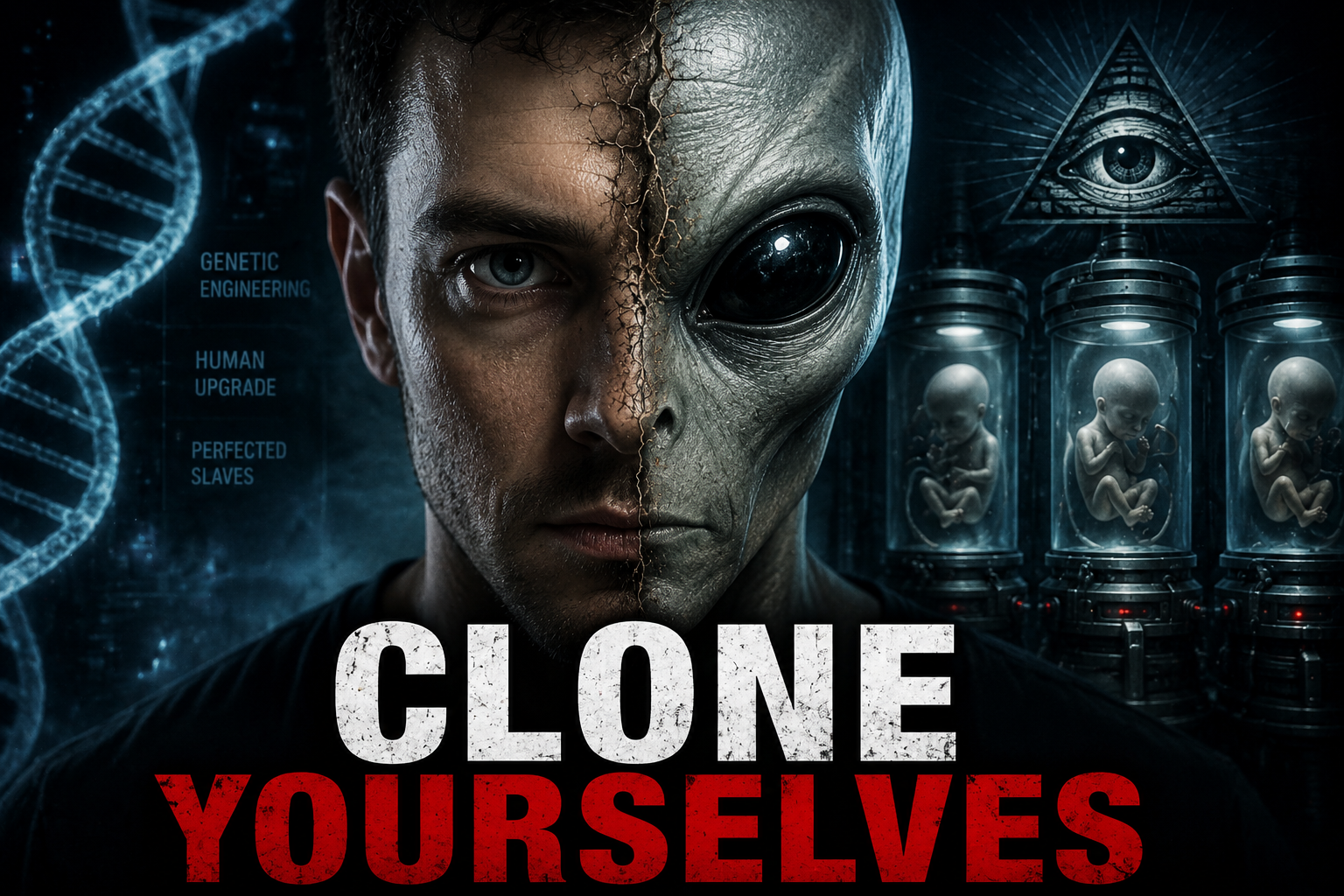
The Transformers universe imagines Earth as a battleground and resource hub for higher technological species whose conflicts extend far beyond human understanding. Humanity becomes secondary—caught in systems and wars it neither controls nor fully comprehends.
Even newer works like Bugonia continue the pattern, exploring paranoia, hidden identities, and the fear that powerful forces operate behind ordinary reality.
Taken individually, these stories are entertainment. Taken collectively, they reveal a recurring cultural obsession: the suspicion that society is managed by unseen architects.
According to this speculative perspective, control is maintained not through overt force alone, but through systems of programming. Media shapes attention. Education shapes obedience. Industry shapes survival. Together, they create a civilization that trains people to become efficient participants in an economic machine.
From childhood onward, humans are conditioned to prepare for productivity. Educational systems reward conformity, memorization, and institutional success. Media systems define aspiration through wealth, status, celebrity, and consumption. Economic systems pressure individuals into constant competition for survival.
The result is a population that willingly participates in its own management.
Corporations direct labor and policy.(digital payments, wearing masks during pandemics)
Politicians direct ideology.
Police direct behavior.
Financial systems direct ambition and punish contradictive behaviour.
Health systems allow for the slaves to heal and repair themselves while dictating consumption.
Each institution reinforces the others, creating a structure powerful enough to guide entire societies without requiring overt dictatorship.
At the center of this system lies Mammon—the ancient symbolic embodiment of greed and material obsession. Whether interpreted spiritually or metaphorically, Mammon represents the elevation of wealth above humanity itself. Modern society often measures human value through productivity, income, influence, and market utility.
People spend their lives chasing numbers.
In pursuit of money, they sacrifice time, health, relationships, creativity, and sometimes morality. Entire populations become locked into cycles of labor and consumption that continuously feed larger systems.
One of the most striking modern examples is social media.
Millions of people voluntarily produce endless streams of thoughts, emotions, opinions, photographs, and behavioral patterns online. Many are rewarded financially through advertising, influence, subscriptions, and digital fame. Yet behind every interaction lies another transaction: data collection.
The real product is not content.
The real product is human behavior.
Every click, preference, fear, argument, and desire becomes information that can be analyzed, predicted, and monetized.
This creates an unsettling possibility. In chasing wealth and visibility, humanity may also be constructing the tools that will eventually dominate it. Artificial intelligence systems learn from human communication at massive scale. They absorb speech patterns, emotional responses, political beliefs, consumer habits, and psychological vulnerabilities.
Humans are effectively training the systems that can influence them.
The machine no longer requires chains.
It requires participation.
Under this theory, the brilliance of the system is that humans enforce it themselves. People compete for status within structures designed by forces larger than them. They defend institutions that exploit them because those institutions also provide identity, security, and meaning.
The Earth becomes a corporation without visible owners.
Workers believe they are free because they can choose between products, careers, and political parties. But the underlying structure remains intact regardless of which option is selected. Production continues. Consumption continues. Data extraction continues.
And perhaps that is the ultimate form of control: a civilization that no longer needs external domination because it has internalized its own programming.
Of course, this entire framework remains speculative and symbolic rather than factual. There is no evidence proving that hidden extraterrestrial creators secretly govern humanity. However, conspiracy theories and science fiction often resonate because they exaggerate recognizable truths about power, manipulation, surveillance, and economic dependency.
Whether or not unseen beings exist, modern systems undeniably influence human thought and behavior on a massive scale. Algorithms shape perception. Corporations harvest attention. Governments monitor populations. Technology increasingly mediates reality itself.
The deeper question raised by these stories is not whether aliens secretly rule Earth.
It is whether humanity has built systems so vast, impersonal, and self-perpetuating that they already function as something alien.
And if that is true, then the challenge is not defeating hidden overlords from another world.
The challenge is reclaiming human agency within systems that profit from surrendering it.