 .
. .
.


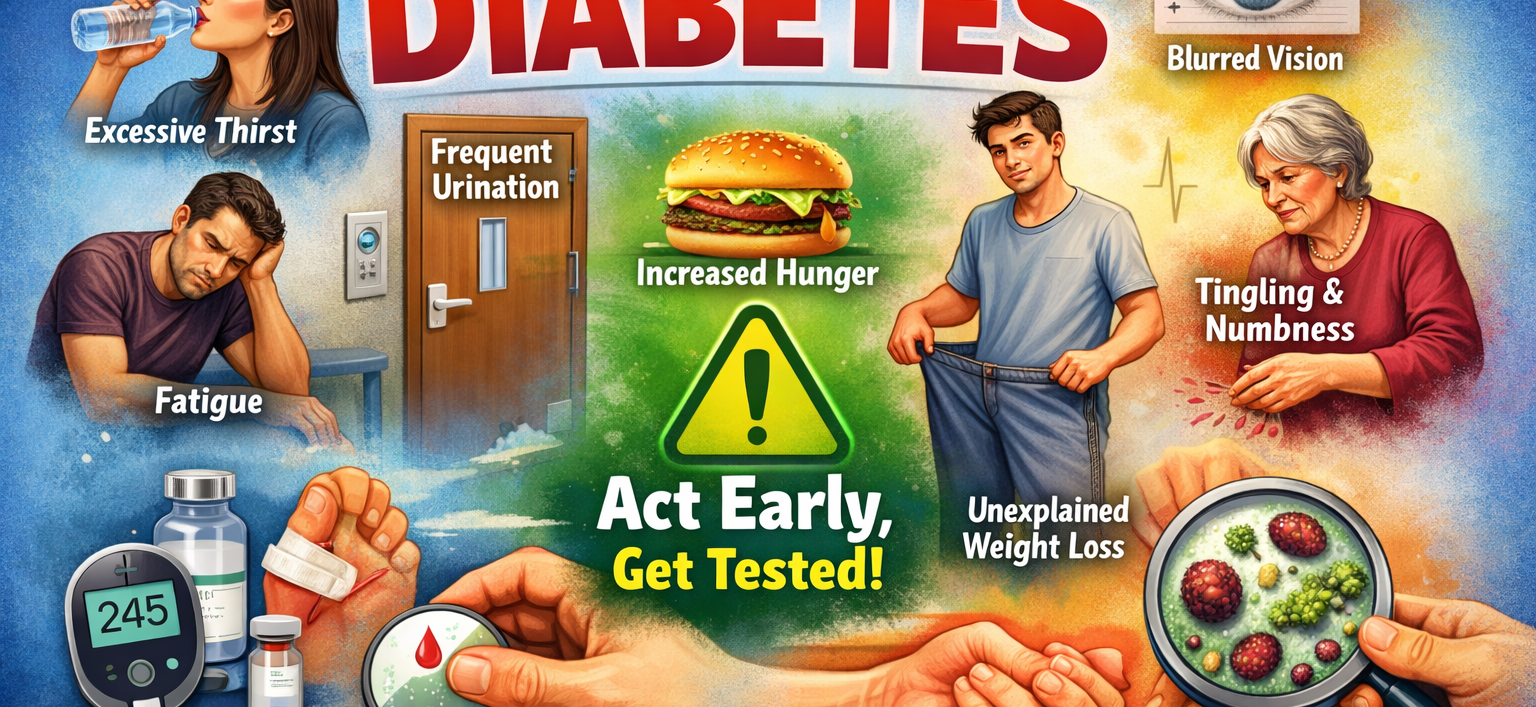
Diabetes is a chronic condition that affects how your body processes blood sugar (glucose). Whether it develops slowly or suddenly, recognizing the warning signs early can make a huge difference in preventing serious complications.
🔍 What Is Diabetes?
There are two main types:
- Type 1 Diabetes – An autoimmune condition where the body stops producing insulin.
- Type 2 Diabetes – A more common condition where the body becomes resistant to insulin or doesn’t produce enough.
Both types lead to elevated blood sugar levels, which can damage organs over time if left unmanaged.
⚠️ Common Signs & Symptoms of Diabetes
1. Frequent Urination (Polyuria)
If you find yourself going to the bathroom more often—especially at night—it could be a sign your body is trying to flush out excess sugar through urine.
2. Excessive Thirst (Polydipsia)
Because your body is losing fluids from frequent urination, you may feel constantly thirsty—even if you’re drinking enough water.
3. Unexplained Weight Loss
Losing weight without trying? This can happen when your body starts burning fat and muscle for energy due to lack of insulin.
4. Increased Hunger (Polyphagia)
Even after eating, you might feel hungry again quickly. This happens because your cells aren’t getting the energy they need.
5. Fatigue
High blood sugar can affect your body’s ability to use glucose for energy, leaving you feeling tired and sluggish.
6. Blurred Vision
Excess sugar in your blood can pull fluid from your eyes, affecting your ability to focus clearly.
7. Slow-Healing Cuts & Wounds
If small cuts or bruises take longer to heal, it could be due to poor blood circulation caused by high blood sugar levels.
8. Tingling or Numbness in Hands & Feet
This may be a sign of nerve damage (diabetic neuropathy), which can develop over time if diabetes is not controlled.
9. Frequent Infections
People with diabetes are more prone to infections such as:
- Skin infections
- Urinary tract infections
- Yeast infections
🚨 When Symptoms Appear Suddenly (Especially Type 1)
In some cases—especially with Type 1 Diabetes—symptoms can appear rapidly and may include:
- Nausea or vomiting
- Abdominal pain
- Fruity-smelling breath
- Rapid breathing
These could be signs of diabetic ketoacidosis (DKA), a medical emergency that requires immediate attention.
👀 Who Is at Risk?
You may be at higher risk for Type 2 Diabetes if you:
- Are overweight or obese
- Have a sedentary lifestyle
- Have a family history of diabetes
- Are over the age of 40
- Have high blood pressure or cholesterol
🩺 When to See a Doctor
If you notice any of the symptoms above, it’s important to get tested. Early diagnosis can help you:
- Prevent complications
- Manage symptoms effectively
- Maintain a healthy lifestyle
💡 Final Thoughts
Diabetes doesn’t always come with obvious warning signs, especially in the early stages. That’s why it’s crucial to listen to your body and take changes seriously.
If something feels off, don’t ignore it—getting checked early can truly save your health.