
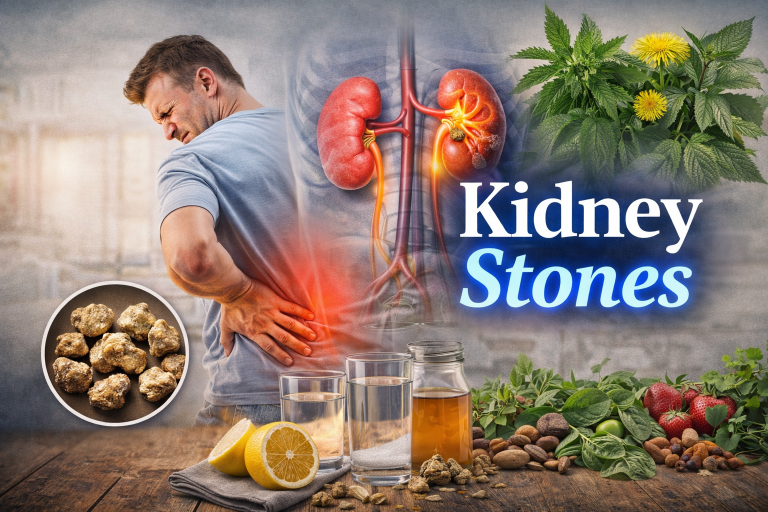
Kidney stones are a common and extremely painful condition that affects millions of people every year. These hard mineral deposits form inside the kidneys and can cause severe discomfort when they move through the urinary tract.
Understanding the symptoms, causes, and possible remedies can help you recognize the problem early and take the right steps to manage it.
What Are Kidney Stones?
Kidney Stones are hard crystals made from minerals and salts that build up in the kidneys. They can vary in size—from as small as a grain of sand to as large as a golf ball.
They develop when urine becomes concentrated, allowing minerals such as calcium, oxalate, and uric acid to crystallize and stick together.
When a stone moves from the kidney into the ureter (the tube connecting the kidney to the bladder), it can block urine flow and cause intense pain.
Common Symptoms of Kidney Stones
Kidney stones often go unnoticed until they begin moving through the urinary tract. When this happens, symptoms can appear suddenly.
Typical symptoms include:
1. Severe Pain
One of the most noticeable symptoms is intense pain in the lower back, side, or abdomen. The pain may come in waves and shift as the stone moves.
2. Painful Urination
Many people experience a burning or sharp sensation while urinating.
3. Blood in Urine
Urine may appear pink, red, or brown due to irritation caused by the stone.
4. Frequent Urge to Urinate
You may feel the need to urinate more often than usual.
5. Nausea and Vomiting
Kidney stone pain can sometimes trigger nausea or vomiting.
6. Cloudy or Foul-Smelling Urine
This may indicate an infection along with the stone.
What Causes Kidney Stones?
Several factors can increase the risk of developing kidney stones.
Dehydration
Not drinking enough water is one of the most common causes. When urine becomes concentrated, minerals can form crystals more easily.
Diet
Diets high in salt, sugar, and certain proteins can increase the risk.
Excess Oxalate Foods
Foods like spinach, nuts, and chocolate contain oxalates that may contribute to stone formation in some people.
Family History
If kidney stones run in your family, your risk may be higher.
Certain Medical Conditions
Conditions such as:
- Obesity
- Diabetes
- Gout
- can increase the likelihood of developing kidney stones.
Natural Remedies That May Help
While some kidney stones require medical treatment, smaller stones can sometimes pass naturally. These remedies may help support the process.
Drink Plenty of Water
Staying well hydrated helps dilute minerals in urine and may help small stones pass more easily. Many doctors recommend drinking 2–3 liters of water per day.
Lemon Water
Lemons contain citrate, which may help prevent stones from forming and can help break down smaller stones.
Apple Cider Vinegar
Some people use small amounts of apple cider vinegar diluted in water to help dissolve mineral buildup.
Herbal Remedies
Certain herbal teas, such as dandelion root or nettle leaf, are believed to support kidney health.
(Always consult a healthcare professional before using herbal treatments.)
When to See a Doctor
Kidney stones can sometimes become serious. Seek medical attention if you experience:
- Severe pain that doesn’t go away
- Fever and chills
- Difficulty urinating
- Persistent vomiting
- Large amounts of blood in urine
Medical treatments may include medication, sound wave therapy, or minor procedures to remove or break apart larger stones.
How to Prevent Kidney Stones
Prevention is often easier than treatment. Some helpful tips include:
- Drink plenty of water every day
- Reduce excess salt in your diet
- Limit sugary drinks and soda
- Eat a balanced diet rich in fruits and vegetables
- Maintain a healthy weight
Final Thoughts
Kidney stones can be extremely painful, but recognizing the symptoms early and staying hydrated can help reduce your risk. Simple lifestyle changes, proper nutrition, and early medical care can make a big difference in preventing future stones.
Taking care of your kidneys today helps protect your health for years to come.